have you ever written a program?
yes, quite a lot
a little, at school or for fun
never
how often do you use AI chats like
ChatGPT
?
every day
every week
now and then
never
have you ever worked with an
AI
agent, like
Claude Code
,
Codex
or
OpenCode
?
yes
I have heard of them
no, never heard of them
how well do you know what happens inside a computer?
very well
roughly
hardly
not at all
how many different values can one byte hold?
8
16
256
no idea
a photo on your phone: roughly how many numbers are stored for it?
a few hundred
a few thousand
tens of millions
no idea
at the lowest level, what does a computer work with?
words
pictures and sounds
numbers: zeros and ones
no idea
you switch off your computer. what happens to what is in its RAM?
it stays there
it is lost
no idea
how important will it be for your career to understand
AI
and to work well with it?
essential
very important
somewhat important
not important
why this module
AI
answers any question in seconds.
it writes, summarises, translates and explains. it seems to know everything.
or does it?
so why learn anything at all?
the same question, fifty years ago:
everyone has
a calculator.
why still
learn maths?
image:
AI
-generated (gpt-image-2.5-flare)
why maths, if you have a calculator?
to write the problem down so that the calculator can solve it.
to notice when 4,000 comes out and 40 would be right.
to know what it cannot calculate at all.
the same holds for computers, and for
AI
.
a computer is just a bigger calculator.
it turns numbers into numbers, billions of times a second. to judge what comes out, you have to understand what it does.
image:
AI
-generated (gpt-image-2.5-flare)
pilots still learn how a plane flies.
the better the autopilot, the rarer the moment a human takes over, and the more that moment depends on understanding.
image:
AI
-generated (gpt-image-2.5-flare)
the most powerful calculator humans built so far
it answers anything in seconds.
it sounds right, even when it is wrong.
it cannot check its answer against the real world.
you learn to work with it: cut, check, measure.
image:
AI
-generated (gpt-image-2.5-flare, edited with gpt-image-2.5-sunburst)
and to understand
AI
what comes next
this module is the foundation. the next one builds on it.
would you like to have a better understanding of computers?
yes, definitely
a little
not really
what you will learn
the map lives on the website
why a project,
and not just
lectures?
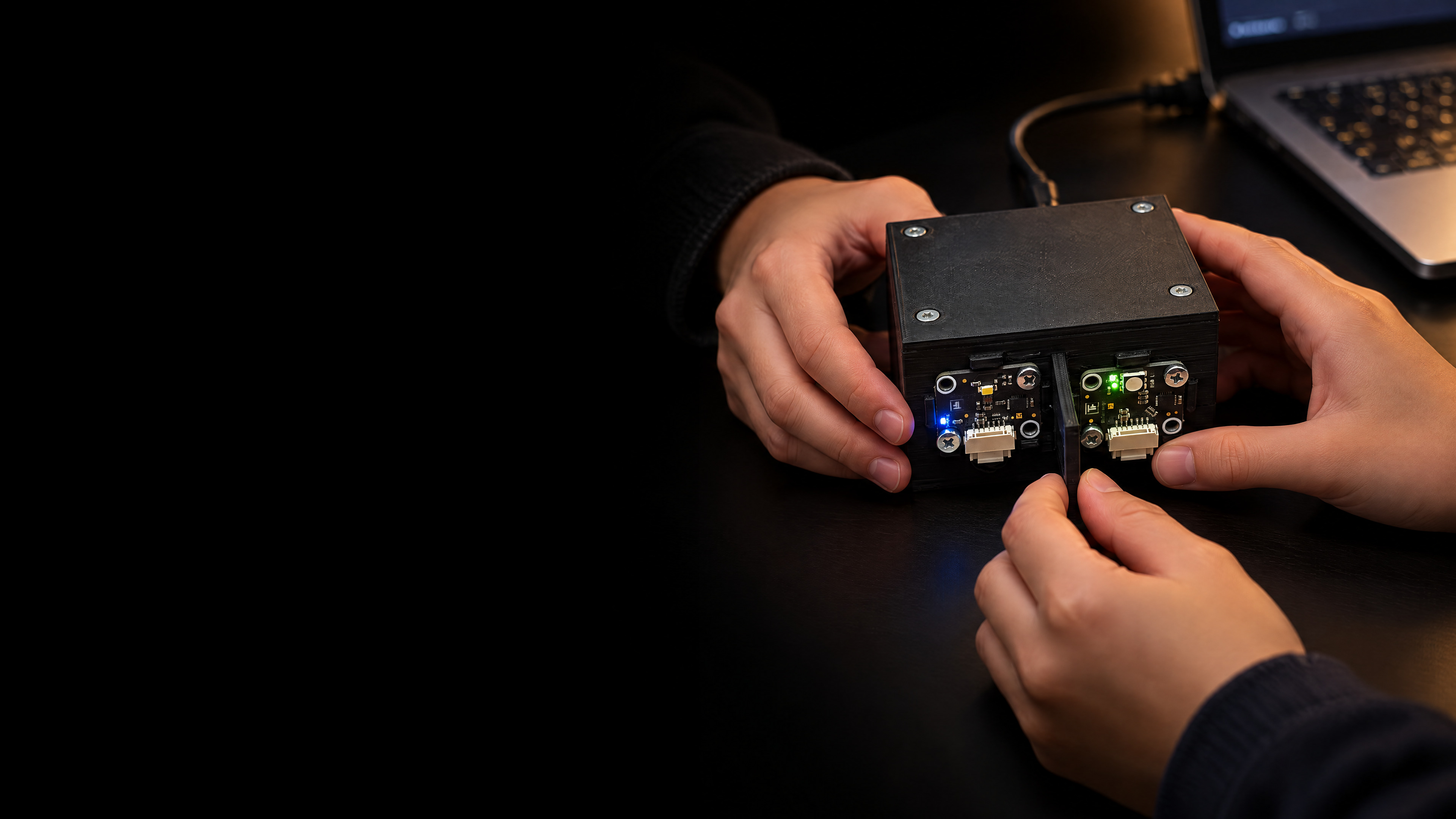
image:
AI
-generated from photos of the real device (gpt-image-2.5-sunburst)
why a project?
learn by doing
concepts stick when you have built them, broken them and fixed them yourself.
problems first
every problem meets you on your own device before it gets a name in class.
reality answers
a device does not care how good an answer sounds. it works, or it does not.
the goal of the lifi project
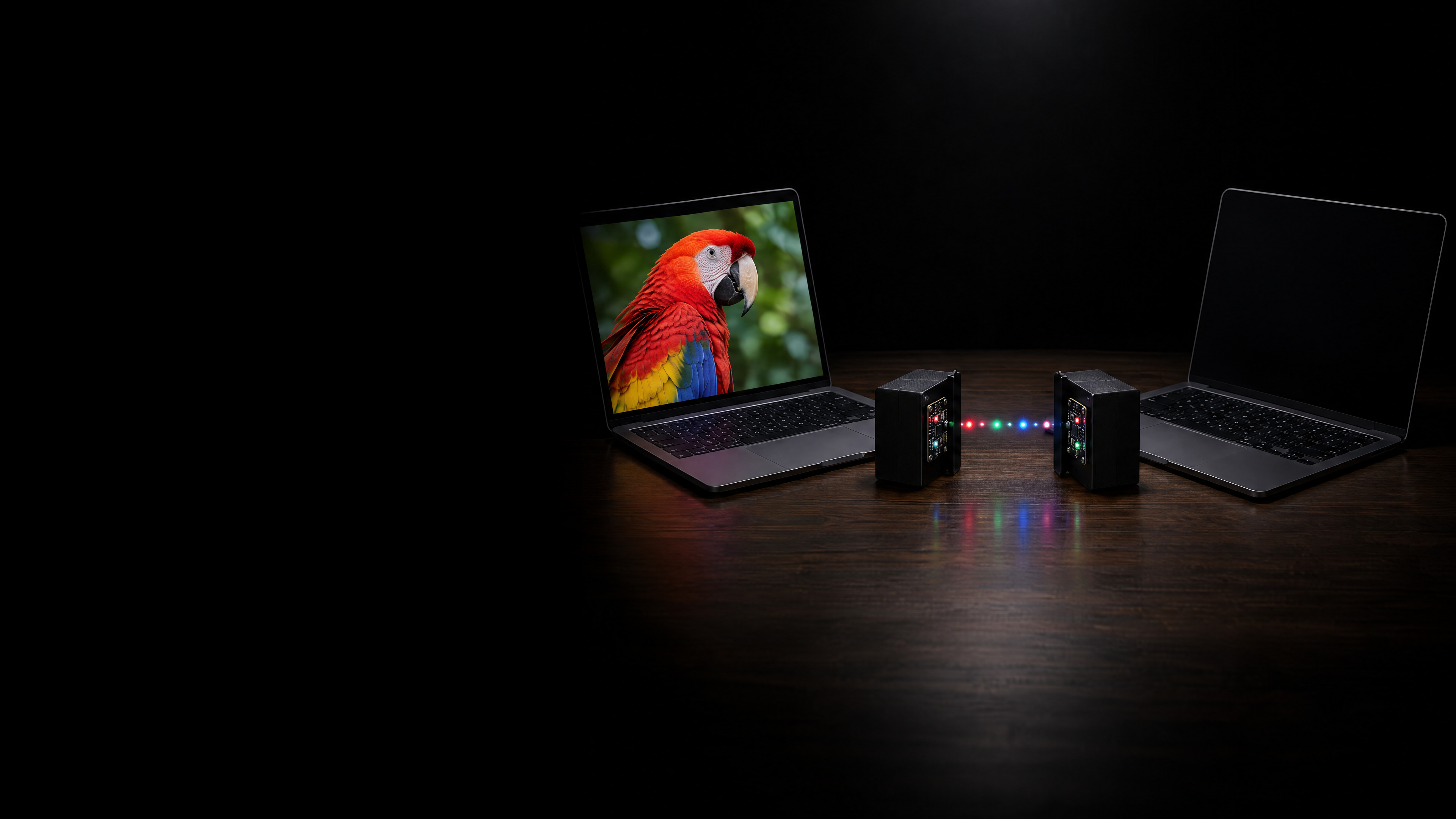
there is a photo
on this laptop.
how does it get
to the other one?
image:
AI
-generated (gpt-image-2.5-flare)
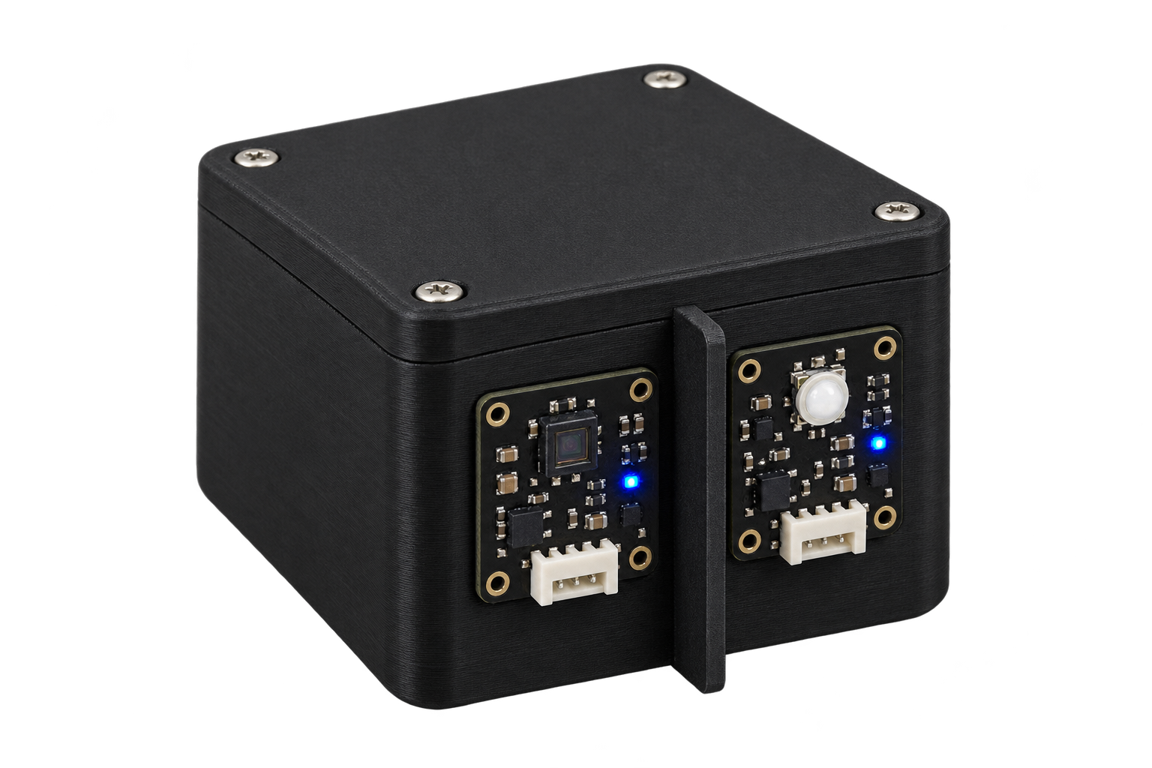
the device
a lamp and an eye on the front of each device. two devices face each other, so light travels both ways.
why a lamp
everything interesting in a computer is invisible.
this project makes it visible: a few times a second, on your desk, where you can explore it with your own hands.
image:
AI
-generated (gpt-image-2.5-flare)
the journey of one photo
every stop on the way is a concept of this module.
the rules
take a pen and a piece of paper.
the screen is the lamp. you are the sensor.
write down every symbol you see, using the alphabet at the bottom.
round 1: four colours, slowly
start (s)
sent
round 2: eight blues
start (s)
sent
round 3: faster
start (s)
sent
round 4: where is the message?
start (s)
sent
round 5: did everything arrive?
start (s)
sent
what went wrong?
→ challenge 1: the alphabet
→ challenge 2: the word
→ challenge 3: the listener
→ challenge 4: the packet
one new difficulty at a time
each challenge adds exactly one new difficulty. everything else stays as you know it.
what every challenge produces
measurement logs
what did you change, what did you keep the same, and what came out?
a description of your solution
enough for another team to rebuild it. from challenge 3 on, a full protocol specification.
a log of mistakes
where the assistant suggested something, and a measurement proved it wrong.
nothing of this is handed in or graded. it is for your team.
how we work
two students, two devices
one device each, so you own both ends of the link. split the work, and swap now and then.
the lamp has the last word
your assistant knows nothing about your device. measure before, measure after, and note where it was wrong.
try the demonstrators
a small toy in the browser for almost every concept: switch a byte, break a file, add noise.
fourteen mondays
1
kick-off: overview & setup
devices, setup, challenge 0 starts
2
cutting problems, algorithms and programs
challenge 0: your first program
3
measuring and experimenting
challenge 0 check
4
analog and digital, symbols and information
challenge 1 starts
5
signal and noise
competition: challenge 1
6
number systems and code systems
challenge 2 starts
7
sampling and synchronization
challenge 2: faster
8
throughput and limits
competition: challenge 2
9
protocols
challenge 3 starts
10
logic and arithmetic
interop test
11
memory and storage
competition: challenge 3
12
errors and redundancy
standardisation session, challenge 4 starts
13
compression
challenge 4: faster and shorter
14
abstraction and layers
final: challenge 4
a typical monday, 15:00 to 18:15
15:00
look back: where are you stuck?
15:30
input: one concept
16:00
experiment, all together
16:30
break
16:45
workshop
18:00
outlook and your task for the week
every monday, the longest block is yours: you build.
every monday
room
HD0001
mondays, 15:00 to 18:15.
laptop and device
bring both, every time. charge the laptop before you come.
attendance list
sign it every week. it is for statistics, not for grades.
the exam
60 minutes
multiple choice on the concepts, everyone on their own. the project is where you meet them.
+5 % bonus
if all five of your challenges are accepted. all or nothing.
0
1
2
3
4
practise
with the questions on every concept page. same format as the exam.
where to find what
docs.lifi-project.de
everything to read: concepts, challenges, setup
lms.hs-osnabrueck.de
announcements, changes, the schedule
your course folder
your assistant and your code
lifi.uber.space/cockpit
your link, live
demos.lifi-project.de
the demonstrators
how do you feel about this module?
looking forward to it
curious
a bit worried
worried
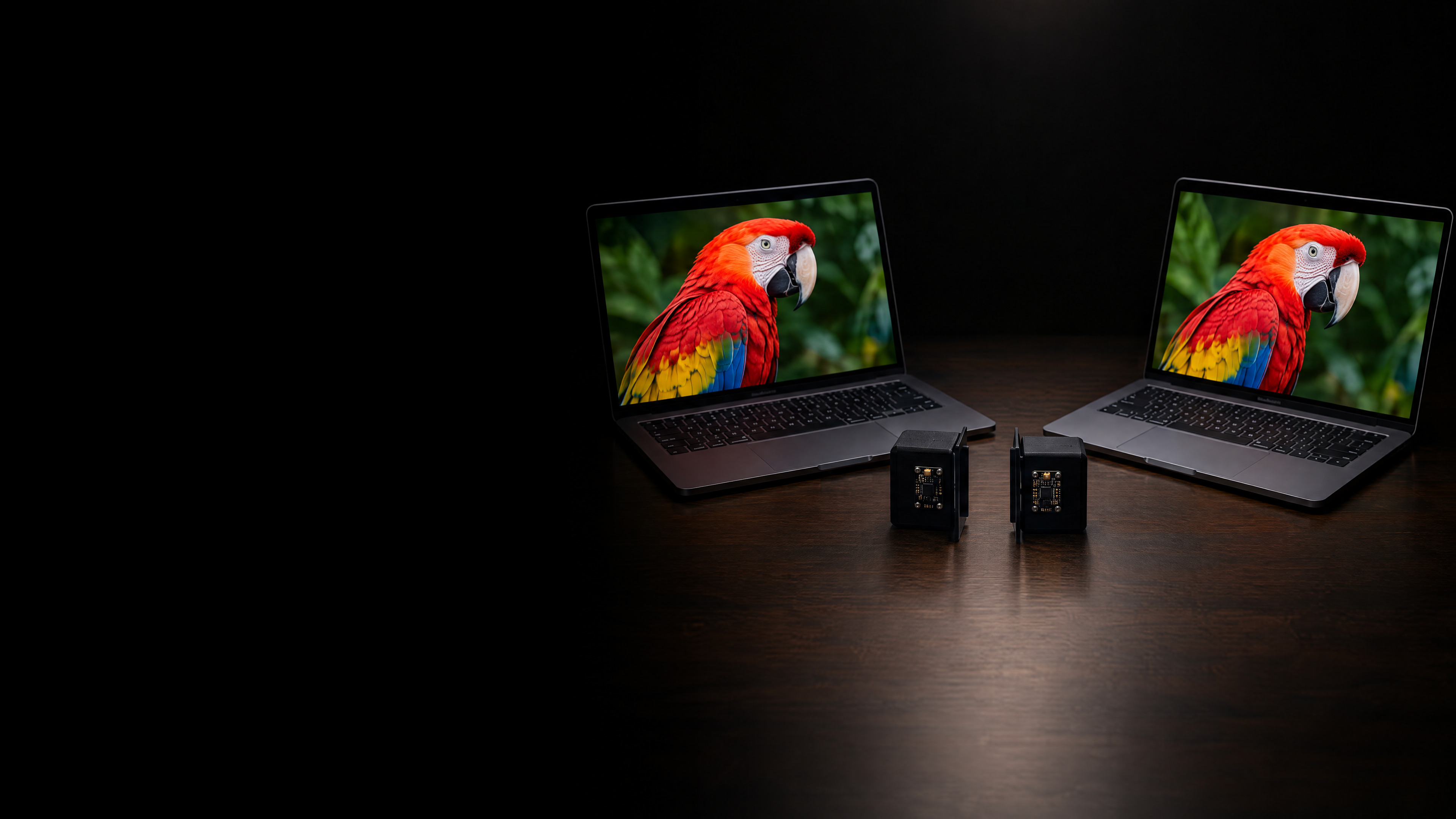
by the end of term,
a picture crosses that gap.
and along the way,
more than one light will go on.
image:
AI
-generated (gpt-image-2.5-flare)